A Chinese Auto Giant and a US Robotaxi Startup Just Signed a $750M Deal — And Nobody’s Talking About It
Table of Contents
While Tesla grabs headlines with its 38-car robotaxi fleet and Waymo expands to new cities, a deal was quietly signed on May 19, 2026 that could reshape the autonomous vehicle industry. ECARX Holdings (Nasdaq: ECX) and May Mobility announced a strategic framework agreement worth an estimated $750 million to build and deploy thousands of Level 4 autonomous robotaxis.
The deal pairs Chinese automotive engineering with American autonomy software — and the target is aggressive: 50% cost reduction compared to current autonomous vehicles, with commercial deployment starting in 2028.
The $750M Deal
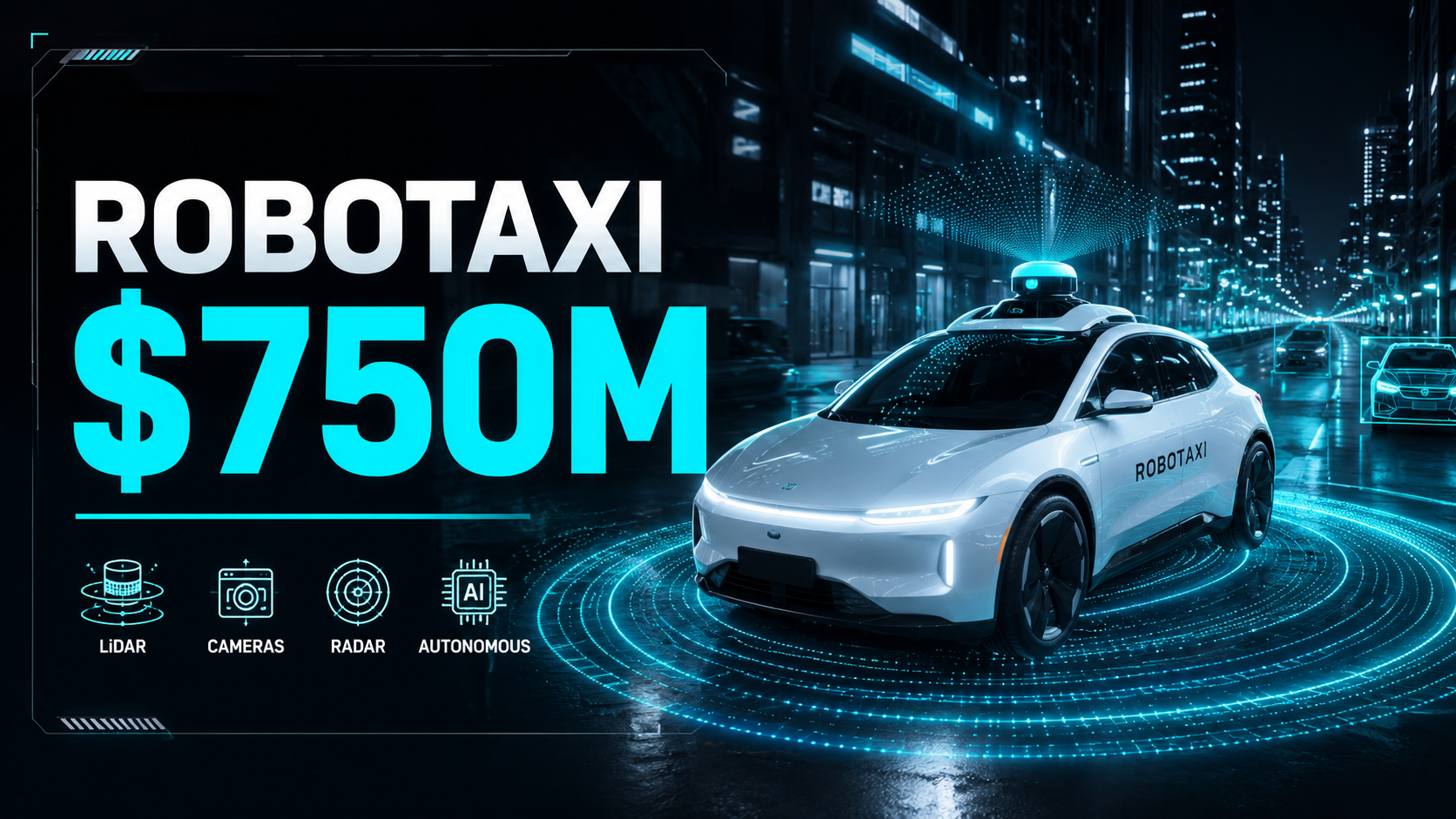
Under the agreement, ECARX will develop and deliver up to thousands of autonomy-enabled vehicles for May Mobility’s next-generation autonomous fleet. The total estimated value is approximately $750 million over the project’s duration, though specific terms are still subject to further negotiation.
ECARX will provide the hardware stack: customized central computing platforms and a full sensor suite including LiDAR, radar, cameras, and inertial measurement units (IMUs) engineered for 360-degree perception. May Mobility will provide the autonomy software that makes the vehicles drive themselves.
Who Is ECARX?
ECARX is an automotive technology company backed by Li Shufu, the founder of Geely — one of China’s largest automakers and the parent company of Volvo Cars, Polestar, and Lotus. ECARX trades on Nasdaq and specializes in intelligent driving solutions, central computing platforms, and automotive software.
The Geely connection is crucial. It gives ECARX access to global manufacturing scale, established supply chains, and decades of automotive engineering expertise. This isn’t a Silicon Valley startup trying to figure out how to build cars — it’s a company backed by one of the world’s largest automotive groups.
Who Is May Mobility?
May Mobility is a US-based autonomous vehicle technology company focused on ride-hail deployment. Unlike companies trying to build fully autonomous personal vehicles, May Mobility focuses on defined-route autonomous services — think airport shuttles, urban ride-hailing zones, and campus transportation.
This focused approach means May Mobility doesn’t need to solve the full self-driving problem everywhere. It needs to solve it extremely well in specific areas — which is a much more tractable problem and a faster path to commercial deployment.
What They’re Building Together
The partnership combines ECARX’s hardware expertise with May Mobility’s software to create a vertically integrated autonomous ride-hail system. Here’s what they’re building:
- Custom Level 4 central computing units — Purpose-built processors for autonomous driving, not repurposed gaming GPUs
- Complete sensor suite — LiDAR, radar, cameras, and IMUs engineered for 360-degree perception
- Purpose-built vehicle platform — A third-party vehicle platform has been identified for initial deployment
- End-to-end integration — ECARX handles the hardware, May Mobility handles the software, and the vehicle manufacturer handles the body
The 50% Cost Cut Strategy
The most ambitious target in this deal is the 50% cost efficiency gain over current autonomous vehicles. Today, a fully autonomous vehicle costs roughly $200,000-$400,000 when you include the computing hardware, sensor suite, and vehicle itself.
By building custom hardware rather than using off-the-shelf components, ECARX and May Mobility aim to cut this to $100,000-$200,000 per vehicle. At that price point, the economics of autonomous ride-hailing start to make sense — you don’t need human drivers, so the vehicle can operate 20+ hours per day.
The key insight is that most autonomous vehicles today use general-purpose computing hardware designed for data centers, not cars. Custom-designed automotive computing platforms can be significantly cheaper, more power-efficient, and more reliable.
The Geopolitical Wrinkle
A Chinese-backed company building autonomous vehicles for American roads raises obvious geopolitical questions. The US government has already restricted Chinese-made connected vehicles and components due to national security concerns.
ECARX appears to be navigating this carefully. Reports indicate the vehicles will be built outside China for US compliance, addressing some regulatory concerns. But the central computing platform — the brain of the autonomous system — is still developed by a Chinese-backed company.
Whether US regulators will approve this arrangement remains to be seen. The deal could face scrutiny from CFIUS (Committee on Foreign Investment in the United States) or new regulations targeting Chinese autonomous vehicle technology.
The Competition
The autonomous ride-hail space is increasingly crowded. Waymo is the current leader, operating in multiple US cities. Tesla has launched a small robotaxi fleet. Cruise is slowly rebuilding after its safety-related shutdown. And multiple Chinese companies — Baidu, Pony.ai, and WeRide — are expanding their operations.
May Mobility’s advantage is its focused approach. Instead of trying to deploy everywhere at once, it targets specific routes and zones where autonomous driving is most feasible and valuable. Combined with ECARX’s cost-optimized hardware, this could create a winning formula for cities and campuses that want autonomous transportation without Waymo’s price tag.
The Timeline
The partners plan to begin initial deployment next year (2027) using an identified third-party vehicle platform. Full commercialization and fleet scaling is targeted for 2028.
That’s an aggressive timeline, but not unreasonable given that both companies have existing technology that needs to be integrated rather than developed from scratch. The biggest risk is regulatory approval, particularly given the Chinese ownership concerns.
The Bottom Line
The ECARX-May Mobility deal represents a new model for autonomous vehicles: Chinese hardware expertise + American software + focused deployment strategy = potential for rapid, cost-effective commercialization.
At $750 million, this is one of the largest autonomous vehicle deals of 2026. The 50% cost reduction target, if achieved, could make autonomous ride-hailing economically viable at a scale that current players can’t match.
The geopolitical risks are real. But so is the opportunity. And in the autonomous vehicle race, the company that can deploy thousands of vehicles at a manageable cost wins — regardless of where the computing platform was designed.
While everyone watches Tesla’s 38 robotaxis, ECARX and May Mobility are quietly planning thousands.